

In Short: MFA in Acting vs. Acting Conservatory
An MFA in Acting and an acting conservatory can both provide rigorous professional training, but they serve different goals. An MFA acting program offers a graduate degree, university resources, and production experience, while an independent conservatory focuses primarily on intensive craft development and professional actor training. The right choice depends on the kind of training you want, whether you need an academic credential, your budget and timeline, and the environment in which you believe you will grow most as an actor.
Once you decide to pursue serious acting training, another question quickly follows: Should you earn an MFA in Acting or train at a professional acting conservatory?
There is no universally correct answer. Both paths can offer rigorous, transformative actor training. The more useful question is: What kind of actor do you want to become, and which environment will best help you become that actor?
What Is an MFA in Acting?
An MFA in Acting is a graduate academic degree centered on advanced artistic training. Programs vary, but many combine acting, voice, and movement classes with university resources, full productions, and an industry showcase. An MFA is also a terminal degree, which may be required or preferred for certain higher-education teaching positions.
For an actor who wants a graduate credential, production experience, or university resources, an MFA may be a strong fit. But the degree alone does not reveal the quality or focus of the training.
What Is an Acting Conservatory?
An independent acting conservatory focuses on intensive professional training without the academic-degree component. It may offer a shorter timeline, a specific technique, and direct access to particular teachers.
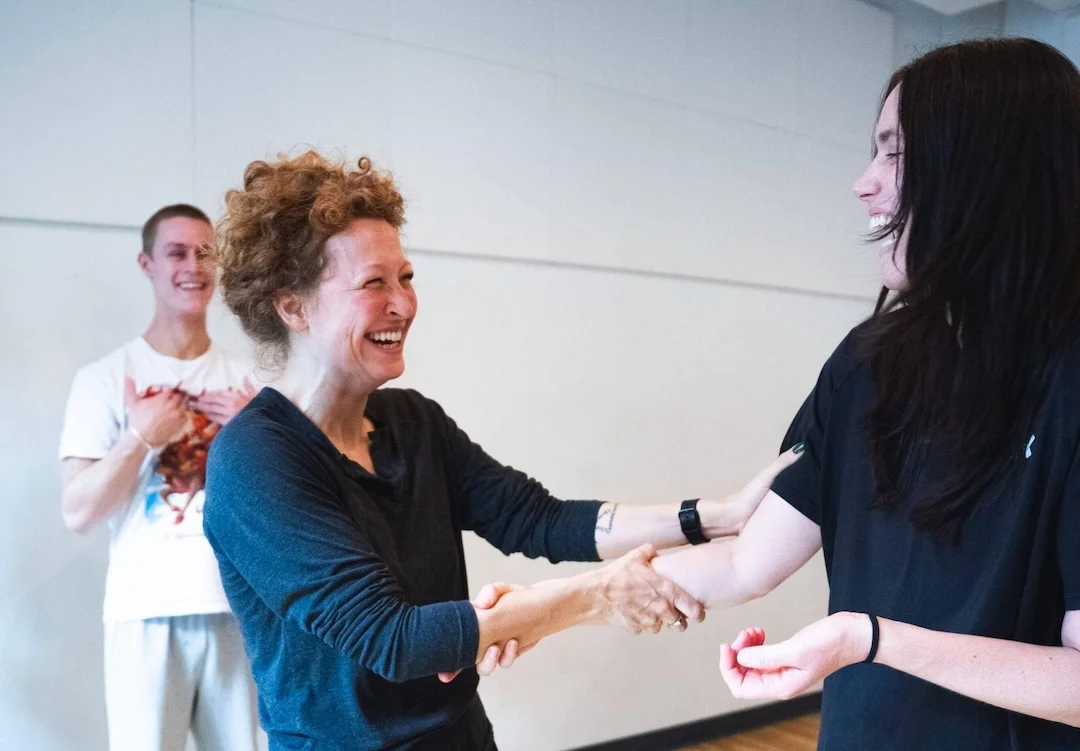
At Terry Knickerbocker Studio, the two-year acting conservatory is centered on the Meisner Technique and supported by Linklater voice and Williamson and Laban movement training. The goal is to develop the actor’s full instrument: heart, mind, body, and voice.
Some university programs use a conservatory-style model, so the practical distinction is whether you want degree-granting graduate training or independent professional training.
What Should You Compare?
The Training
The most important question is simple: What will I actually learn?
Look beyond course titles. Is the curriculum structured to build over time? Does it offer a foundational technique rather than a collection of disconnected classes? Do acting, voice and movement support one another? Will you leave with a repeatable process you can use when the work becomes difficult?
Serious actor training should develop listening, imagination, emotional availability, physical freedom, and the ability to work truthfully with text. As Terry puts it, “Build the instrument, then figure out how to be in the business, and then go get it.”
The Teachers and Community
A prestigious name does not necessarily tell you who will teach you each week. Research the faculty’s professional and teaching experience, training lineage, and philosophy. Find out who teaches each level and how closely they work with students.
Actors need room to take risks, fail, and try again. Ask whether the culture feels collaborative or competitive and whether students have access to mentorship.
Location and Industry Preparation
Location is part of the education. Training in or near a strong theatre community can give you regular access to performances, working artists, and the professional market you may eventually enter.
Industry preparation matters, but it should not be confused with craft. Auditions, self-tapes, representation, and career strategy become far more useful when an actor has something solid to bring into the room. TKS’s Brooklyn location places students within New York City’s artistic community, while its career-focused training helps actors approach the business after developing the instrument.
Time, Cost and Overall Value
Compare more than annual tuition. Consider the full program length, housing, living expenses, scholarships, financial aid, possible student debt, and time away from professional work.
One format is not automatically more affordable than the other. The real question is whether the total investment aligns with your goals. Review each school’s published costs, including acting conservatory tuition, and ask exactly what is included.

When Does Each Path Make Sense?
An MFA may make sense if you value a graduate credential, want production experience, may teach in higher education, or feel strongly drawn to a particular university’s faculty, curriculum, and network.
An acting conservatory may make more sense if your priority is intensive professional training, you want to study a specific technique or teacher, or you prefer to train in a professional acting market on a shorter timeline.
In either case, research alumni and outcomes without treating them as guarantees. Ask what graduates say about the training and whether they left with a craft they could reliably use.
Do You Need an MFA to Become a Professional Actor?
No. An actor does not need an MFA or another academic degree to work professionally. What matters is developing a dependable craft, learning how to work consistently under professional demands, and understanding how to navigate the industry.
An MFA is valuable when its particular combination of training, productions, faculty, resources, and degree credential supports your goals. A professional acting conservatory can be equally appropriate for an actor whose priority is intensive craft training without pursuing a graduate degree.
Does an MFA Guarantee an Acting Career?
No. Neither an MFA nor an acting conservatory can guarantee representation, bookings, or a professional career. Even the best-known MFA acting programs cannot promise what happens after graduation.
What training can do is help you become a more skilled, prepared, and resilient actor. Terry’s advice is to resist shortcuts: develop the craft, learn how the industry works, and pursue your career strategically.
If acting is the work you need to do, choose the program that will help you go all in on becoming the best actor you can be.
Explore the TKS Two-Year Acting Conservatory or book a conversation to determine whether the program fits your goals.
Key Takeaways
- An MFA in Acting and an acting conservatory can both provide rigorous actor training, but an MFA awards a graduate degree while an independent conservatory focuses on professional training without the academic credential.
- The quality and structure of the training matter more than the name of the program. Compare the curriculum, faculty, teaching philosophy, production opportunities, and how the training develops over time.
- An MFA may be a stronger fit for actors who value a graduate credential, university resources, significant production experience, or the possibility of teaching in higher education.
- An acting conservatory may be a stronger fit for actors who want intensive, craft-centered professional training, a particular technique or teacher, and do not need an academic degree.
- Cost, program length, location, and community should all be part of the decision. Consider the total investment rather than tuition alone.
- Neither path guarantees an acting career. At Terry Knickerbocker Studio, the emphasis is on developing a dependable craft and repeatable process that actors can carry into professional work.