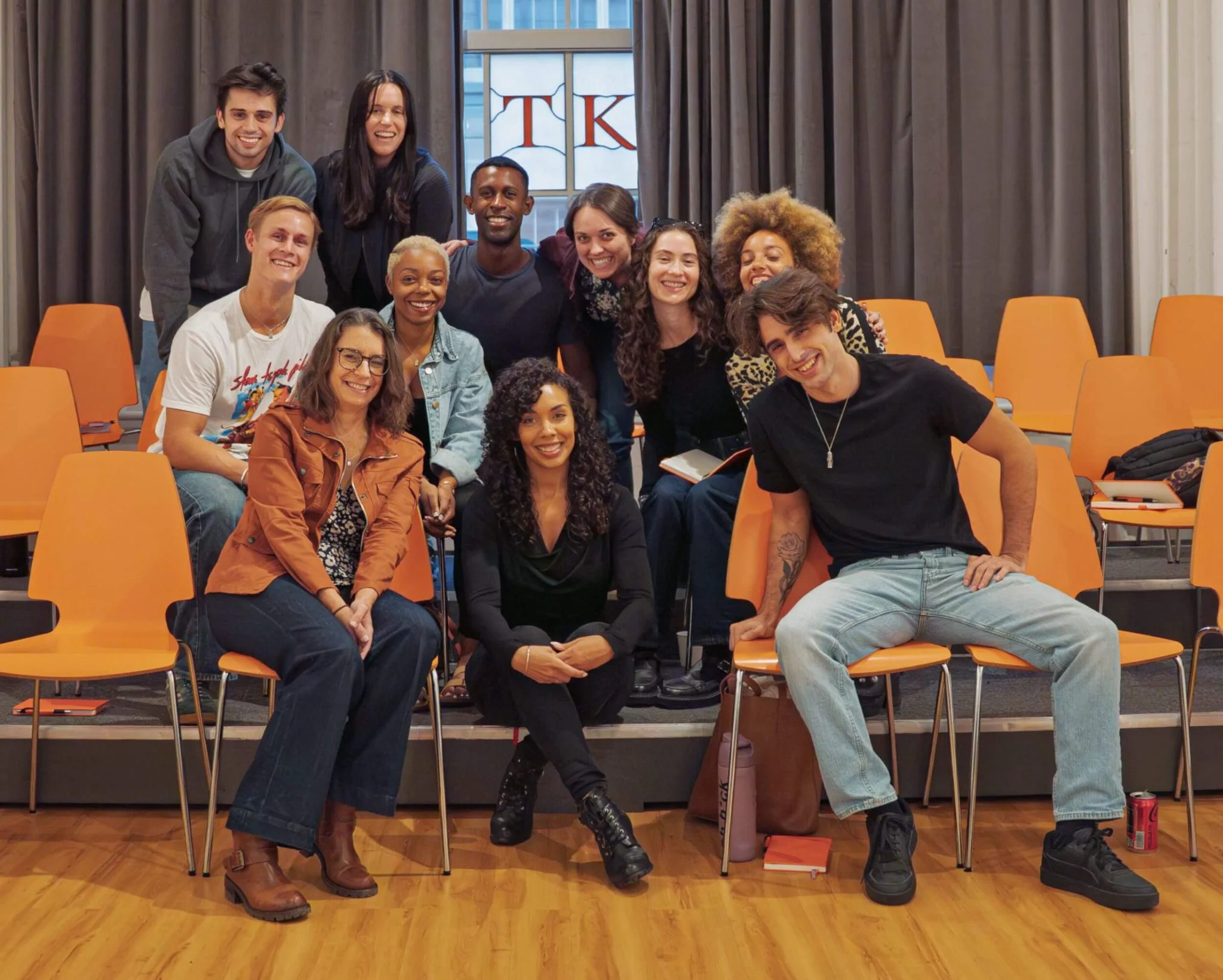

What does a real conservatory experience actually do for an actor?
In this episode of TKS Talks, Associate Meisner Instructor Celestine Rae sits down with Christopher Lewis Dawkins, a graduate of the two-year Conservatory Acting program, to talk about what changes when training is sustained, structured, and deeply human.
They cover the parts people don’t always name out loud: the emotional rigor of two years of intentional vulnerability, the myth of “just wing it,” the shift from perfectionism to play, and why Meisner Technique Training doesn’t just build better acting, it builds a more grounded artist.
If you’re researching an Acting Conservatory NYC program, considering an MFA Acting path, or simply wondering what conservatory training is for, this conversation offers a clear, honest look at what the TKS Conservatory Experience can develop in an actor over time: craft, confidence, autonomy, and the ability to keep creating, regardless of what the industry is doing.
What Makes the TKS Conservatory Experience Different?
What makes the TKS Conservatory different from other NYC acting programs? Early in the conversation, Celestine names something that hits at the heart of professional actor development: two years may sound long, but it passes quickly, because so much happens inside it.
Not just scene work. Not just technique.
Transformation.
How does the faculty support student growth? Celestine describes the two-year experience as “beautifully intense.” Like moving from caterpillar to butterfly. The metaphor speaks for the reality of the experience: when an actor commits to a long-term process, they don’t come out the same person who walked in.
And that’s kind of the point.
Because actor development isn’t simply adding skills to a skill set. It’s reshaping instinct, presence, emotional availability, and your relationship to failure so you can keep showing up with freedom and clarity.
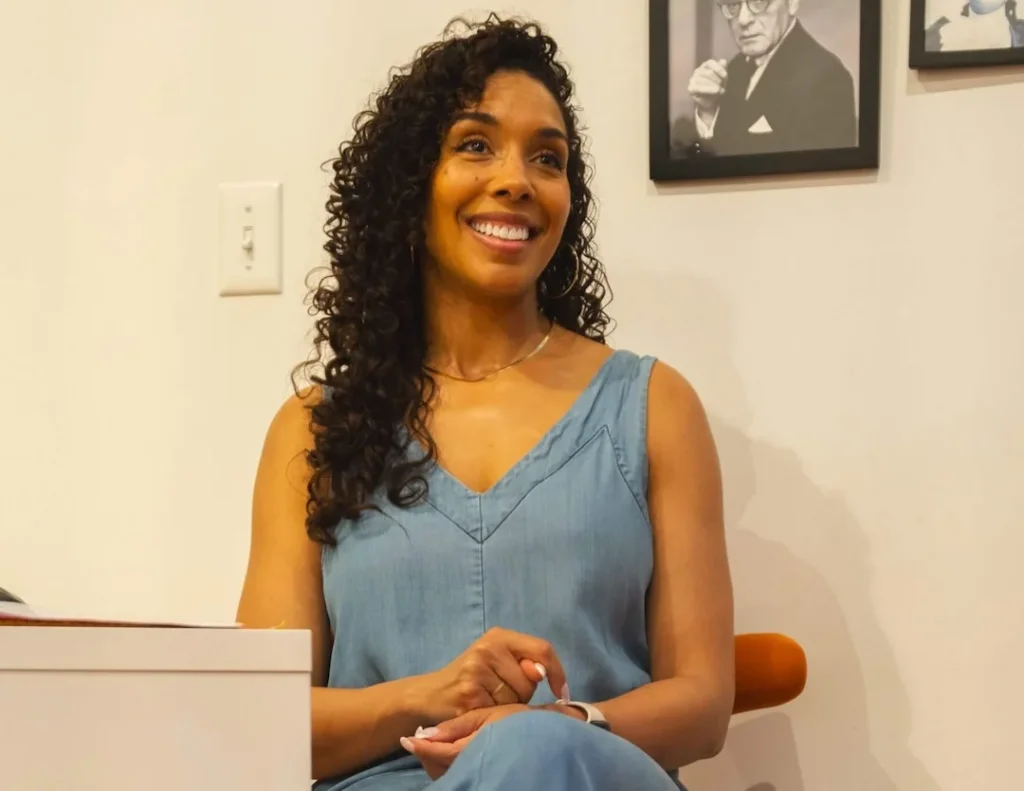
Confidence Without Arrogance: Trusting the Work, Trusting Yourself
One of the most compelling parts of Christopher’s reflection is how he talks about confidence now:
Not as swagger. Not as “I’m the best in the room.”
More like: I’m not confused anymore.
He describes walking into rooms, auditions, sets, and creative spaces with an ease that comes from trusting the technique and trusting himself. That confidence shows up in how he connects, how he collaborates, and how he stays present under pressure.
And when Celestine asks him to define “ease,” his answer is simple and specific:
The basics are in his body now.
Listening. Responding. Being available.
He describes working on a microbudget feature film that was purely improv, and instead of spiraling into overthinking, he relied on fundamentals: listening and responding truthfully in the moment. The training had become instinctual.
Celestine expands on that idea with a dancer’s metaphor: doing barre work so consistently that when it’s time to dance, you’re not thinking about steps, you’re inside the work.
That’s what technique is for.
Not to make acting more intellectual, but to make it more embodied.
Raw talent vs. trained craft (and why actors are athletes)
Celestine brings up something nearly every actor has encountered: the belief that acting is something you can “just do,” because it’s “natural.”
And yes, raw talent exists.
But Christopher frames it in a way that makes the difference obvious: actors should think like athletes.
Athletes don’t just show up on game day and hope. They train when no one’s watching. They build consistency, repeatability, and stamina. They develop a process.
Christopher even shares a story about his parents playing basketball and how his mom taught his dad the technique of shooting so he could replicate success consistently.
That’s the argument for conservatory training in a single image:
It’s not just “getting the ball in.”
It’s knowing why it went in, so you can do it again.
And when the stakes are higher, eight shows a week, take after take on set, unpredictable conditions, that consistency matters.
This is where the Meisner Technique becomes more than a method. It becomes infrastructure.
From Shutdown to Play: Changing Your Relationship with Failure
A major throughline in this conversation is the shift from perfectionism to freedom.
Christopher speaks honestly about how he used to shut down, especially when he made a mistake. He recounts a moment in class where he froze after getting “off book,” became defensive, and disconnected. Celestine brought him back into reality, not by shaming him, but by helping him see the pattern: trying to “get it right” was pulling him out of presence.
They name something that’s both simple and radical:
Perfection isn’t human.
And because acting is the practice of truthful human behavior, perfection actually blocks the work.
Celestine points out we’re socialized to be productive, not human. Socialized to suppress big feelings, to stay “contained,” to fall in line. Conservatory training becomes a place where actors re-learn emotional truth and impulse without collapse.
Christopher describes learning that failure isn’t catastrophic, it’s part of the process. And later, he goes even further: failure became fun. Failure became the thing that helped him “leave himself alone” and discover something new.
Celestine underlines why that matters: when one actor gives themselves permission to fail and play, it gives the entire room permission.
That’s not just actor development, that’s leadership.
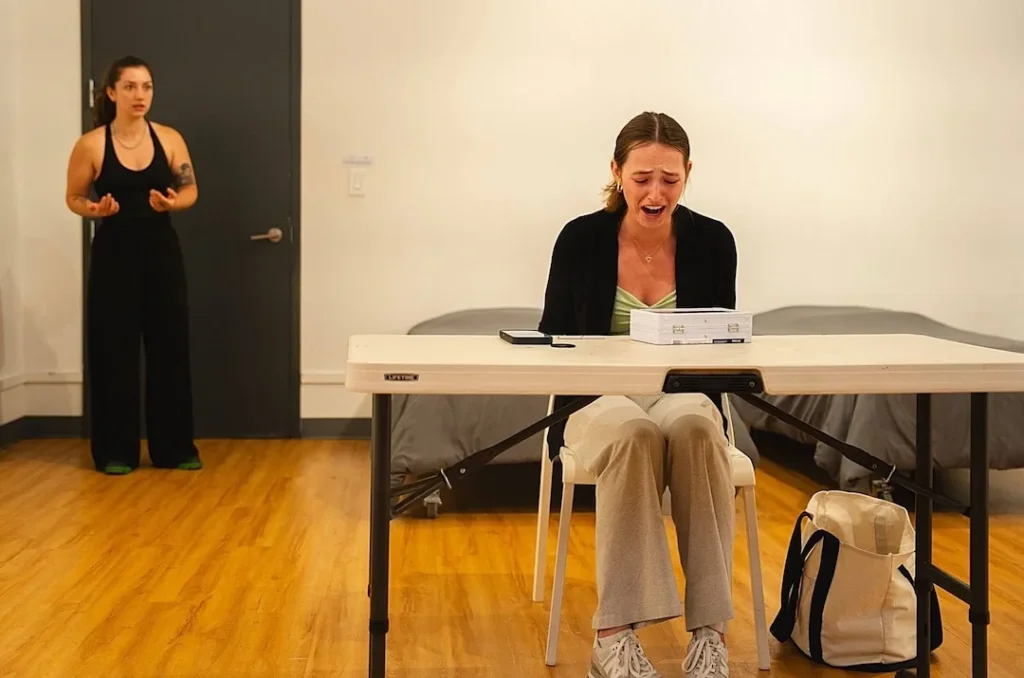
Autonomy, Collaboration, and Becoming an Artist (Not a Dependent)
One of the most powerful moments is when Christopher says something that might sound surprising at first:
Training gave him the feeling that he didn’t “need” anyone.
Not in an anti-collaboration way. In a self-trust way.
He explains that he no longer feels dependent on a teacher for affirmation or a director for every answer, because he has tools. He can bring something to the table. He can make choices. He can collaborate as an equal creative partner.
Celestine names the nuance beautifully: we all want validation sometimes (we’re human), but the goal is self-validation: knowing when you’ve done your best, knowing when you haven’t, and being honest either way.
That autonomy doesn’t make collaboration smaller. It makes it real. Because collaboration requires two artists bringing something, not one person waiting to be told what to do.
And that connects to one of the core values that comes through clearly here: the Conservatory isn’t centered on “booking the job.” It’s centered on making you an artist, someone who can keep creating and keep growing, even when the industry goes quiet.
“Why train if I can just post content?”
Celestine asks a question that feels very current: if you can pick up your phone, make content, build a following, why train?
Christopher’s answer is direct: training is what gives work substance.
He gives a simple scenario: say “I love you,” then say it while you actually hate the person. Without training, you may just be saying lines. With training, you’re creating life, contradiction, and humanity.
Celestine adds the bigger point: there’s content that you scroll past like potato chips, consumption without nutrition. And then there’s storytelling that moves you, stays with you, changes you.
If you want to affect people as an artist, training matters. Not to chase approval, but to deepen craft, connection, and impact.
What the Conservatory really gives you
If there’s one takeaway from Celestine and Christopher’s conversation, it’s this:
The Conservatory isn’t just teaching you how to act.
It’s teaching you how to be in the work, with freedom, endurance, and humanity.
And in a field that changes constantly, that kind of grounded, repeatable craft is what lasts.
Interested in the TKS Conservatory Experience? Explore the two-year program and learn how Meisner-based training supports long-term actor development.
FAQs: The TKS Conservatory Experience
What makes the TKS Conservatory different from other NYC acting programs?
Early in the conversation, Celestine names something that hits at the heart of professional actor development: two years may sound long, but it passes quickly, because so much happens inside it.
Not just scene work. Not just technique.
Transformation.
How does the faculty support student growth?
Celestine describes the two-year experience as “beautifully intense.” Like moving from caterpillar to butterfly. The metaphor speaks for the reality of the experience: when an actor commits to a long-term process, they don’t come out the same person who walked in.
Can I audition for professional work while attending the Conservatory?
Many actors continue engaging professionally while training, but your capacity will depend on your schedule, energy, and the demands of the program. This conversation highlights that the work can be emotionally and physically intensive, so planning, pacing, and honest bandwidth assessment matter.
What success have alumni seen after the program?
Christopher shares that after graduating (2024) and taking time to integrate, he returned to auditioning with more ease and confidence, has been busy with projects, and has experienced meaningful feedback rooted in the quality of his work and process. Outcomes vary by actor, but the emphasis here is on building the craft and mindset that support longevity.
Is it hard to get into a conservatory?
Conservatories vary widely. In general, programs look for commitment, readiness to train, and the capacity to engage consistently over time. “Hard” isn’t only about selectivity, it’s about whether you’re prepared for the rigor and the long-game nature of the work.
What is the main purpose of a conservatory?
Conservatory training is designed to develop the actor over time through structured, sustained practice, building technique, repeatability, and artistic growth rather than short-term performance outcomes.
What happens in a conservatory?
You train consistently. You practice foundational skills until they become second nature. You get opportunities to fail safely, refine processes, and develop emotional and creative availability, so you can bring life to text, build character truthfully, and collaborate with confidence.
What does conservatory mean?
In acting, “conservatory” typically refers to an intensive, practice-centered training environment focused on craft development over an extended period (often 1–3 years), emphasizing repetition, technique, and artistic growth.
What is an acting conservatory?
An acting conservatory is a structured program designed to train actors through consistent practice, technique study (like Meisner), and progressive skill development, often with a strong emphasis on process and long-term growth.
Are acting conservatories worth it?
If you want a deep foundation, repeatable tools, and a sustained training container. If you’re looking for shortcuts, conservatory training may feel “too slow.” But if you’re building a long career, conservatory work is often where actors develop confidence, autonomy, and craft that lasts.
What is the hardest acting school to get into?
“Hardest” can mean different things: lowest acceptance rates, most competitive auditions, or the most intensive training demands. Many highly competitive programs are university-based (often tied to MFA pathways), while conservatories vary. The better question is: which environment matches your goals, learning style, and readiness for rigor?
What age is too late to start acting?
There isn’t a universal cutoff. What matters is your willingness to train, your commitment to the process, and your readiness to keep growing. Acting careers can evolve at many ages, and training can start whenever you’re ready to do the work.