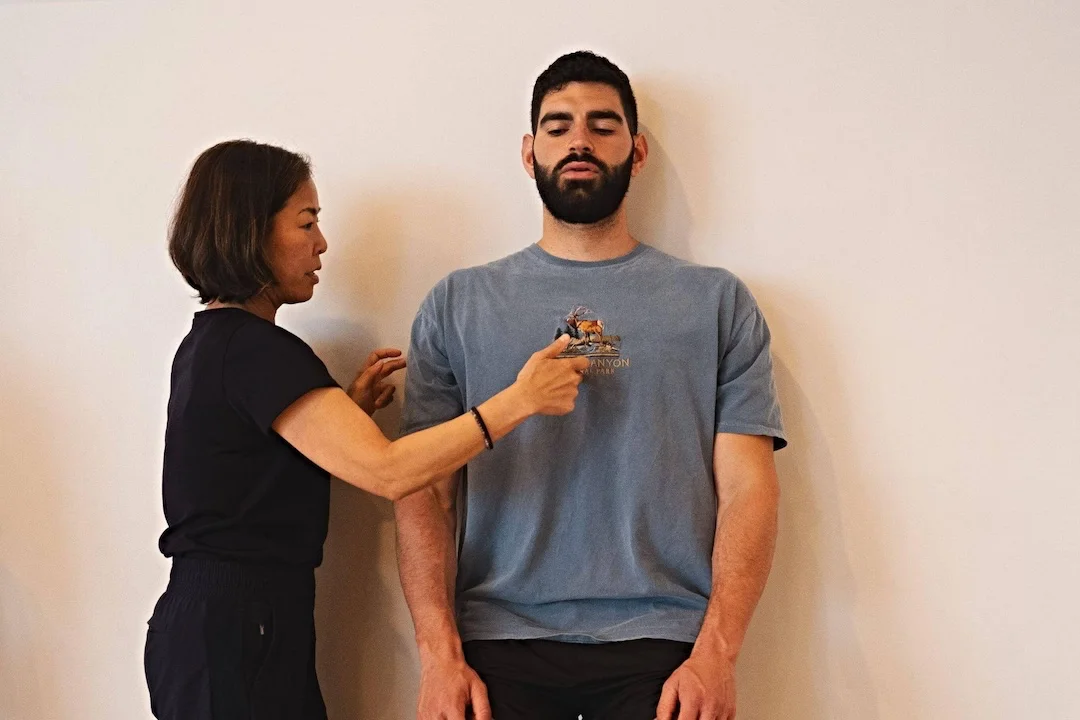

At Terry Knickerbocker Studio (TKS), movement training for actors isn’t an “extra.” It’s part of building an instrument that can meet the demands of the work: onstage, on camera, and in the room.
In this TKS Talks conversation, Terry sits down with Nate Flower, who has been a cornerstone of the studio from the beginning, to unpack what movement training actually does: how it helps actors recognize physical habits, soften defenses, access impulse, and develop the kind of precision that makes imagination readable.
What follows is a deep dive into the throughline of their conversation: mastery comes from craft-trained consistently, embodied fully, and carried into the world.
Why movement training matters for actors (especially now)
Terry names something many actors are feeling: the industry is tight, opportunities can feel scarcer, and the pool can feel smaller. Nate’s answer isn’t panic, it’s clarity:
The only real advantage is to get as good as you can get.
Not “book faster.” Not “hack your way in.” The focus is on becoming a stronger actor through disciplined craft.
And movement is part of that instrument. As Nate puts it, acting excellence isn’t only about reading a script and interpreting a character. It’s built on foundational training: acting, voice, and movement, which are core components of TKS’s professional actor training programs and help develop an actor’s ability to respond with freedom and specificity.
The real work: habits, defenses, and what your body is protecting
One of the most useful parts of this conversation is how direct they are about habits.
Nate describes how actors arrive with body habits already in place, habits that often formed for good reasons: coping, surviving, adapting. The problem isn’t that they exist. The question is:
Are those habits supporting your best work?
Terry offers a simple image: if you grew up in Alaska, you needed a parka. But if you’re in Miami, you may not need that same protection. The goal isn’t “lose your defenses.” It’s:
Make them optional.
That’s a core movement-training aim: giving the actor choice. So they can soften, open, expand, and respond when the work calls for it, without being hijacked by old, rigid protection.
What happens in a TKS movement class
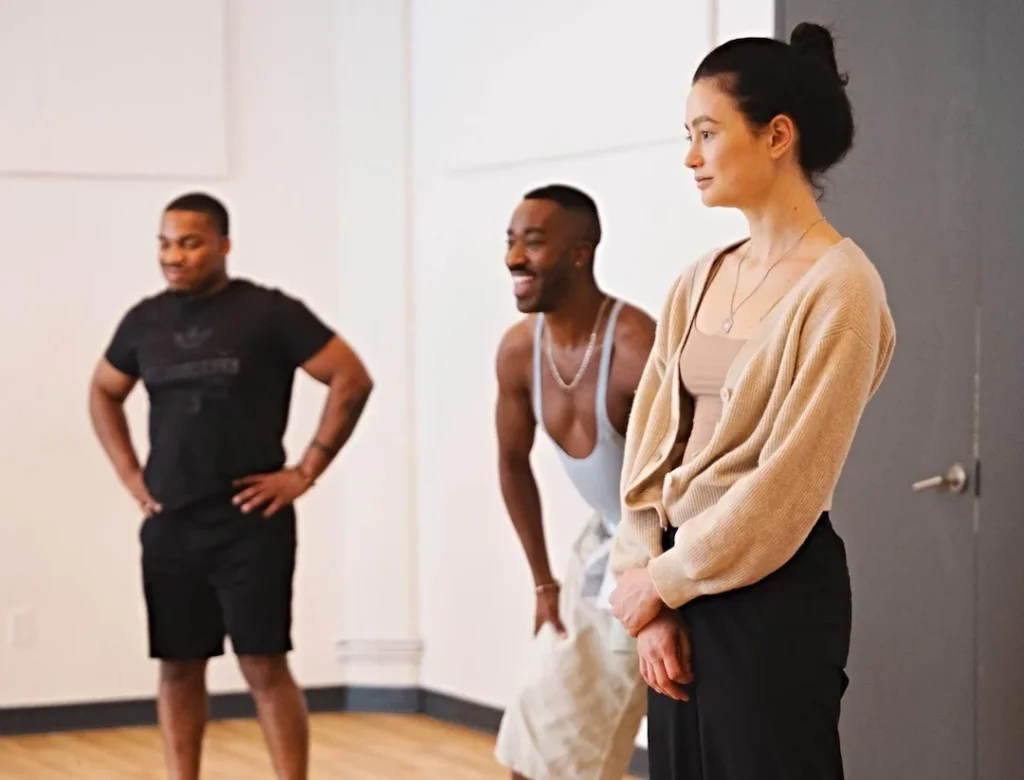
Nate shares specifics about what movement training looks like in practice, not in theory.
1) You learn a vocabulary that changes your body
In class, Nate offers key pieces of physical vocabulary, sometimes one, sometimes several, and asks actors to work the entire session with them. A word like “softening” becomes a practical tool: the actor notices contraction, returns to softening, and repeats until it begins to land as a new habit.
2) You work with “macro” and “micro” space
Nate describes shifting between:
- Macro space: the furthest reaches of the body; expansion, reach, stretch
- Micro space: close to the core; tight, internal, compact
Same actor. Same body. Different prompt. Different impulse. Different availability.
3) You train impulse without “performing.”
A key distinction Nate makes: the work isn’t about “acting a character” in movement class. It’s about using prompts to transform your physical response, making impulse more available, and the technique becomes the support (not the cage).
At TKS, movement is structured as a multi-semester progression within the studio’s two-year Meisner-based conservatory training, designed to create not just “more physical” actors, but more available, more responsive, more precise ones.
The test: can you keep it alive outside the studio?
One of the most actor-real moments: Nate talks about what happens the second class ends.
You feel open, long, wide, awake, and then you pick up your phone, put on your coat, and suddenly it’s like you’ve put your habits back on.
So Nate gives students a grounded challenge:
Can you make it from the studio to the subway while keeping some of that alive?
Not to become “present on the subway” as a lifestyle trend, but because it’s how the new habit gets embedded. The goal is integration: the actor doesn’t become two separate people (“training self” vs. “real life self”). The work becomes part of the person.
“Be all-in” (even if you change your mind later)
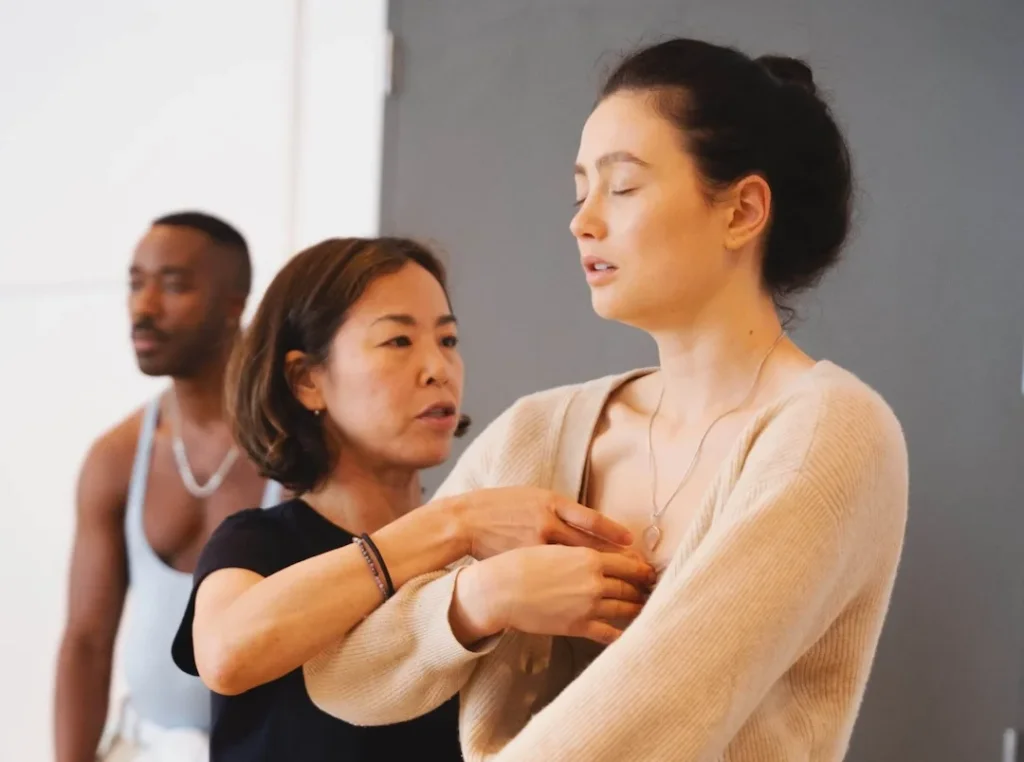
They return to something deceptively simple: commitment.
Terry frames it like this: even if you change your mind one day, about the path, the profession, anything, while you’re here, do it thoroughly.
Nate echoes the difference every teacher recognizes:
- The actor who receives training passively
vs. - The actor who partners with it, who takes ownership, shows intention, and chooses growth on purpose
That’s where acceleration happens. Not magic. Not woo. Just consistent, embodied effort.
Precision + imagination: the combination that reads as “professional.”
Nate’s definition of success isn’t “balance” (he says he hates that word). It’s a rich amalgamation:
- Precision and efficiency (technical craft, proportion, control)
- Plus imagination and personal investment (human life, story, risk)
Too much precision without humanity becomes clinical. Too much passion without shape becomes messy. The actor who stands out is the one whose body can hold both: clear craft and real life.
This is where movement training becomes an essential part of an actor’s professional craft. It helps actors embody the story with specificity so the work isn’t just felt internally, it’s readable to an audience.
Movement training for modern acting: on-camera + motion capture acting
The more acting becomes camera-facing (and increasingly tech-facing), the more physical clarity matters.
Motion capture acting, and performance capture depend on the actor’s ability to communicate through body, rhythm, alignment, and clean physical choices. The tech doesn’t “invent” performance; it records it.
Movement training helps actors build:
- A responsive, adaptable body
- Clearer physical intention
- Less habitual tension interferes with choice
In other words: more precision… with more life.
Common Questions About Movement Training for Actors
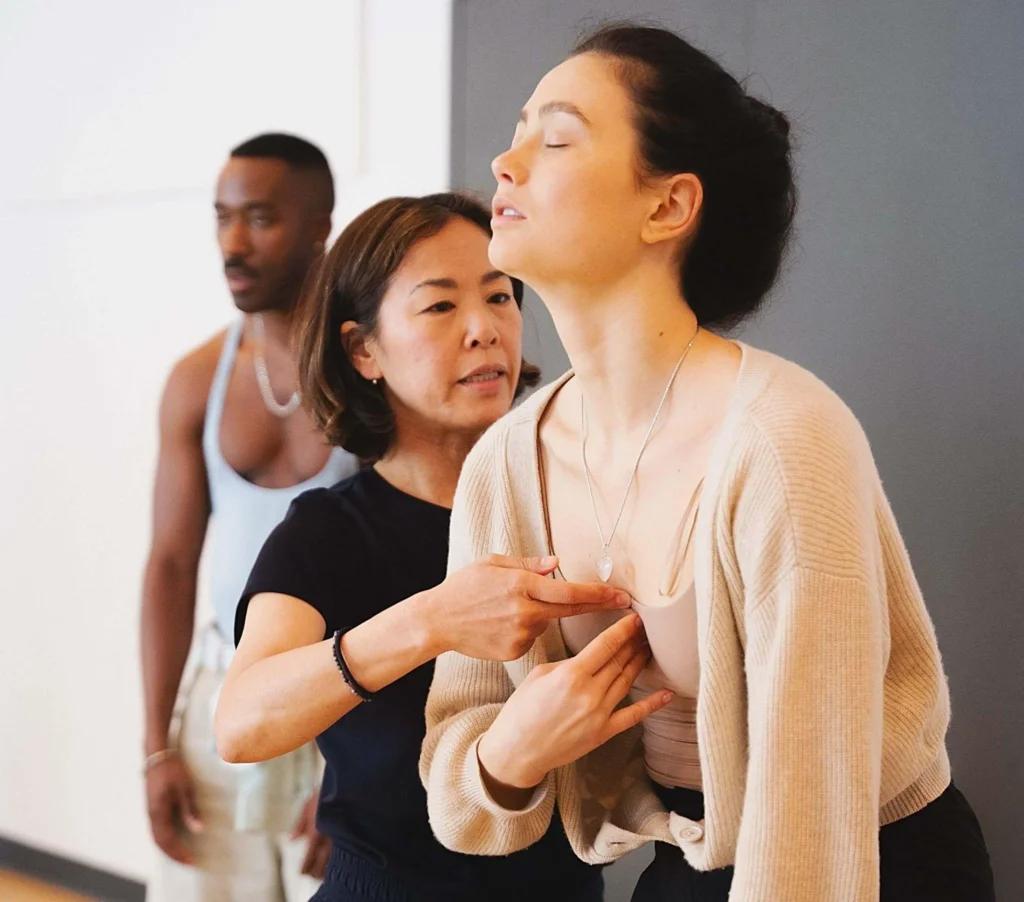
As actors begin exploring physical training as part of their craft, a few practical questions often come up about what movement training involves and how it supports professional acting work.
Is Movement for Actors the same as a dance class?
Not usually. Dance classes often prioritize choreography, style, and execution. Movement training for actors focuses on developing the actor’s instrument: identifying physical habits, expanding responsiveness, and strengthening the body’s ability to communicate story.
Rather than learning routines, actors work with impulse, breath, alignment, and awareness so the body can respond truthfully, whether a role calls for stillness, precision, or physical intensity.
How does movement training help my acting career?
Movement training helps actors become more physically available and readable in performance. As habitual tension interferes less, actors gain clearer access to impulse and stronger control over physical choices.
This physical clarity is especially valuable for on-camera work, auditions, and roles that require subtle but precise expression.
Do I need prior physical training to join?
No. Movement training for actors is typically designed for performers with a wide range of physical backgrounds.
The work progresses step by step: actors begin by noticing habits and gradually develop greater awareness, range, and control. The goal isn’t athletic ability, it’s building a responsive instrument that supports truthful acting.
Watch the full TKS Talks conversation between Terry Knickerbocker and Nate Flower below to hear how movement training shapes an actor’s craft and physical instrument.
Final takeaway: mastery is built, not wished for
If there’s one thread running through this entire conversation, it’s this:
Training is how you become undeniable.
Movement training isn’t about being “more flexible” in the abstract. It’s about becoming more intentional, and less ruled by habit, more supported by craft, and more capable of telling a story with your whole instrument.
That’s the work Nate Flower describes: craft, precision, commitment, and the willingness to stay in the experiment long enough for it to change you.
Are you interested in developing your physical instrument as an actor?
Our movement program helps actors identify physical habits, expand their expressive range, and build the kind of embodied precision Nate Flower describes, training that supports truthful work on stage, on camera, and in the audition room.
Click here to learn more about Movement Training at TKS.
Key Takeaways
- Movement training for actors builds a responsive physical instrument that supports truthful acting.
- Actors learn to recognize and release unconscious physical habits that limit expression.
- Movement vocabulary helps actors develop clearer impulse, precision, and physical intention.
- Training integrates body awareness with imagination, allowing performers to read clearly on stage and on camera.
- Physical training is increasingly valuable for modern performance formats like motion capture acting.
- At Terry Knickerbocker Studio, movement is taught as part of a rigorous conservatory approach to actor training.
FAQs
Is Movement for Actors the same as a dance class?
Not usually. Dance classes often prioritize choreography, style, and execution. Movement training for actors focuses on developing the actor’s instrument: identifying physical habits, expanding responsiveness, and strengthening the body’s ability to communicate story.
How does movement training help my acting career?
Movement training helps actors become more physically available and readable in performance. As habitual tension interferes less, actors gain clearer access to impulse and stronger control over physical choices.
Do I need prior physical training to join?
No. Movement training for actors is typically designed for performers with a wide range of physical backgrounds.
What is Laban Movement Analysis, and why is it useful for actors?
Laban Movement Analysis is a system for understanding how the body moves through space, weight, time, and flow. For actors, it provides a practical vocabulary for making physical choices and building character through movement.
What physical skills do actors develop through movement training?
Movement training helps actors develop core physical skills such as posture, alignment, gesture, and expressive movement. These skills support clearer storytelling and more specific, embodied performances.